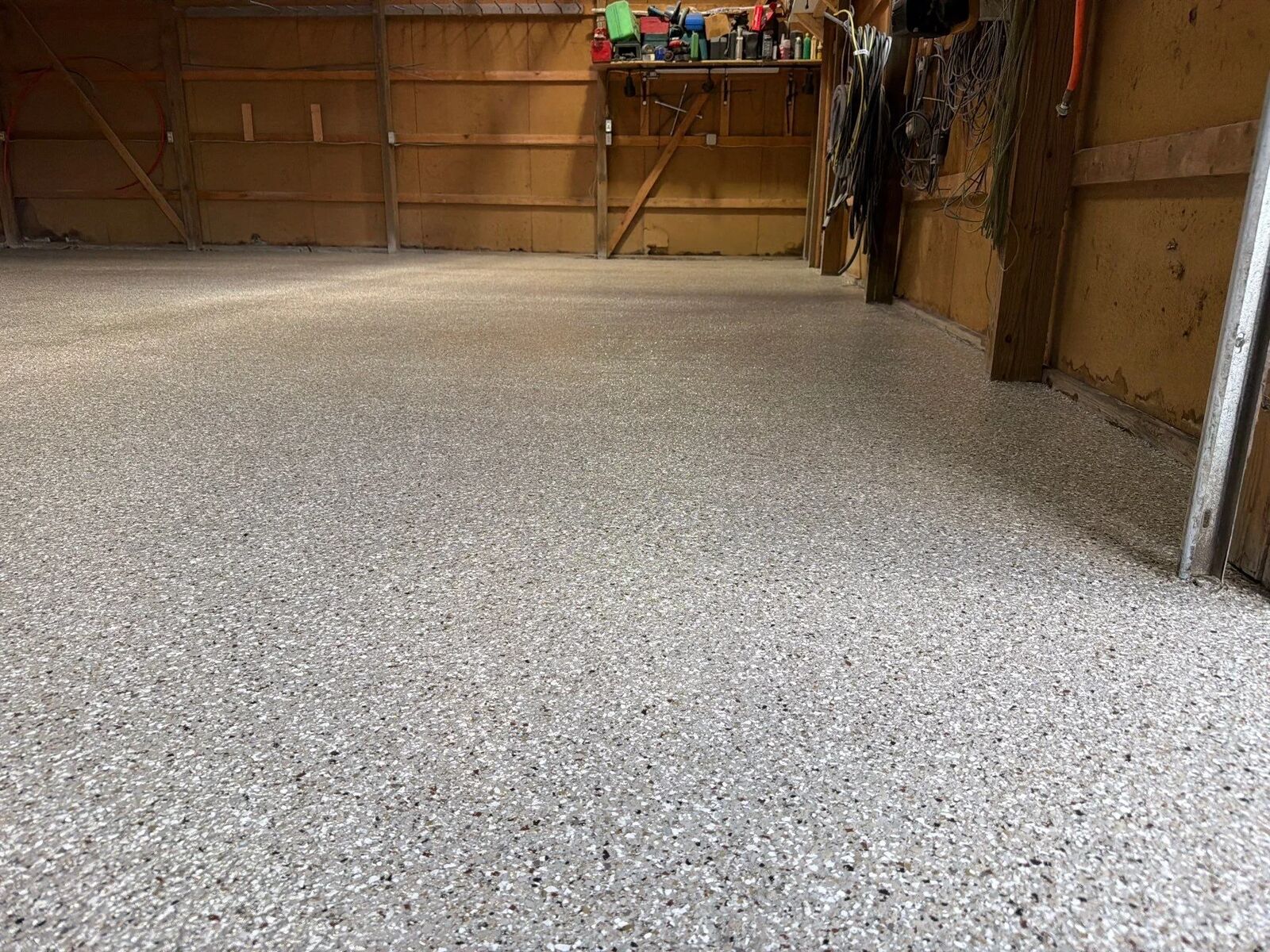
Both systems use the same polyurea base coat and the same clear polyaspartic top coat. The only real difference is what we broadcast into the base: biodegradable, nontoxic vinyl flake for decorative floors, or sand for shop floors. Flake is for spaces you look at daily. Sand is for spaces you work in.
What is actually different between the two systems?
Less than most people expect. A decorative flake floor and a shop floor are built the same way: we grind the concrete, repair it, roll a polyurea base coat, broadcast something into that wet base, then seal the whole thing under a clear polyaspartic top coat.
The broadcast is the fork in the road. Decorative floors get a biodegradable, nontoxic vinyl flake. Shop floors get sand instead. Everything above and below that layer is identical.
So when a homeowner in South Bend or Mishawaka calls and asks which system is better, the honest answer is neither. They are the same chemistry doing two different jobs. The question is what the room is for.
When should you pick a flake floor?
Pick flake if you look at the floor every day. Attached garages, finished basements, sunrooms, workout rooms, a garage that doubles as a hangout space — anywhere appearance is part of the point.
Flake gives you color and pattern. It hides dust, tire marks and the everyday mess of a working garage far better than a solid color does, because your eye reads the blend instead of the dirt. That is a practical benefit, not just a cosmetic one.
Flake also adds some texture underfoot, since the chips sit proud in the base coat before the top coat goes over them. If you are weighing colors, we wrote about choosing flake colors for your garage floor separately.
When should you pick a shop floor?
Pick sand if the room is a workspace. Detached shops, pole barns, equipment bays, hobby shops where you weld, wrench or run a lift. Floors that see tools, carts and the occasional dropped wrench.
Sand gives you a more consistent, uniform grip across the whole slab, and it is less visually busy than flake, which some people prefer in a working building. You are buying texture rather than color.
It is also the simpler look, which fits most shop buildings. If you want the detail on the material itself, we covered why we broadcast sand on shop floors.
What does the clear top coat do in both cases?
The clear polyaspartic top coat is the wear surface. It seals the broadcast layer in so flake or sand is not loose on the floor, and it is what you actually walk and drive on.
On a flake floor, the clear coat brightens the flake colors. The chips look flat and dusty right after the broadcast and before the top coat; the clear is what pulls the color out.
On a shop floor, the clear locks the sand in place so the texture stays where we put it instead of sweeping away over time.
What is the same no matter which you choose?
Prep. Every installation includes diamond grinding, dust control with HEPA-filter vacuums, cracks cut open and filled with a two-part repair material, and pitting filled and ground back smooth once it has cured. That work is included, not an upcharge, and it matters more to how the floor holds up than the broadcast does. More on that in our post on fixing cracks and pitting before a coating.
Cure time is the same too, and it depends on temperature rather than the system. In warmer weather, 24 hours to walk on and 72 hours to drive on. In colder weather, 48 hours to walk on and 96 hours to drive on. In Michiana that cold-weather window is real for a good part of the year, and we tell you which one applies before we start.
Price is driven by square footage and the condition of the slab, not by whether we throw flake or sand. We quote every floor on site after we have looked at the concrete.
How do we decide together on the estimate visit?
We come out, look at the slab and the space, and ask what you do in the room. That usually settles it in about two minutes.
If the answer is split — say an attached garage where you also run a workbench — flake is still the common pick, because the texture is there and the color does more for a space you see from the house. If the building is detached and strictly for work, sand.
Estimates are free. Call Jonathon at (574) 400-3199 or use the contact page and we will set a time. We are currently taking $500 off installation.
Frequently asked questions
Can I put flake in a shop building if I want the look?
Yes. Nothing stops us from installing a flake floor in a detached shop. It is your call. We just want you to know you are choosing it for appearance rather than function, since the sand broadcast is the more typical fit for a working floor.
Is one system more slip resistant than the other?
Both have texture from the broadcast layer. Sand gives a more uniform grip across the whole slab, which is why we use it on shop floors. Any coated floor is slick when wet, so we talk through traction with you before we start.
What is the flake made of?
A biodegradable, nontoxic vinyl. It is broadcast into the wet polyurea base coat and then sealed under the clear polyaspartic top coat.
Can I do flake in the garage and sand in the shop at the same time?
Yes, and it is a common request on properties with both. We will quote each space on the estimate visit and schedule them in whatever order makes sense for you.
Do you serve areas outside South Bend?
We work across Michiana, including Mishawaka, Elkhart, Warsaw, Niles and Kalamazoo. You can see the full list on our service areas page.