
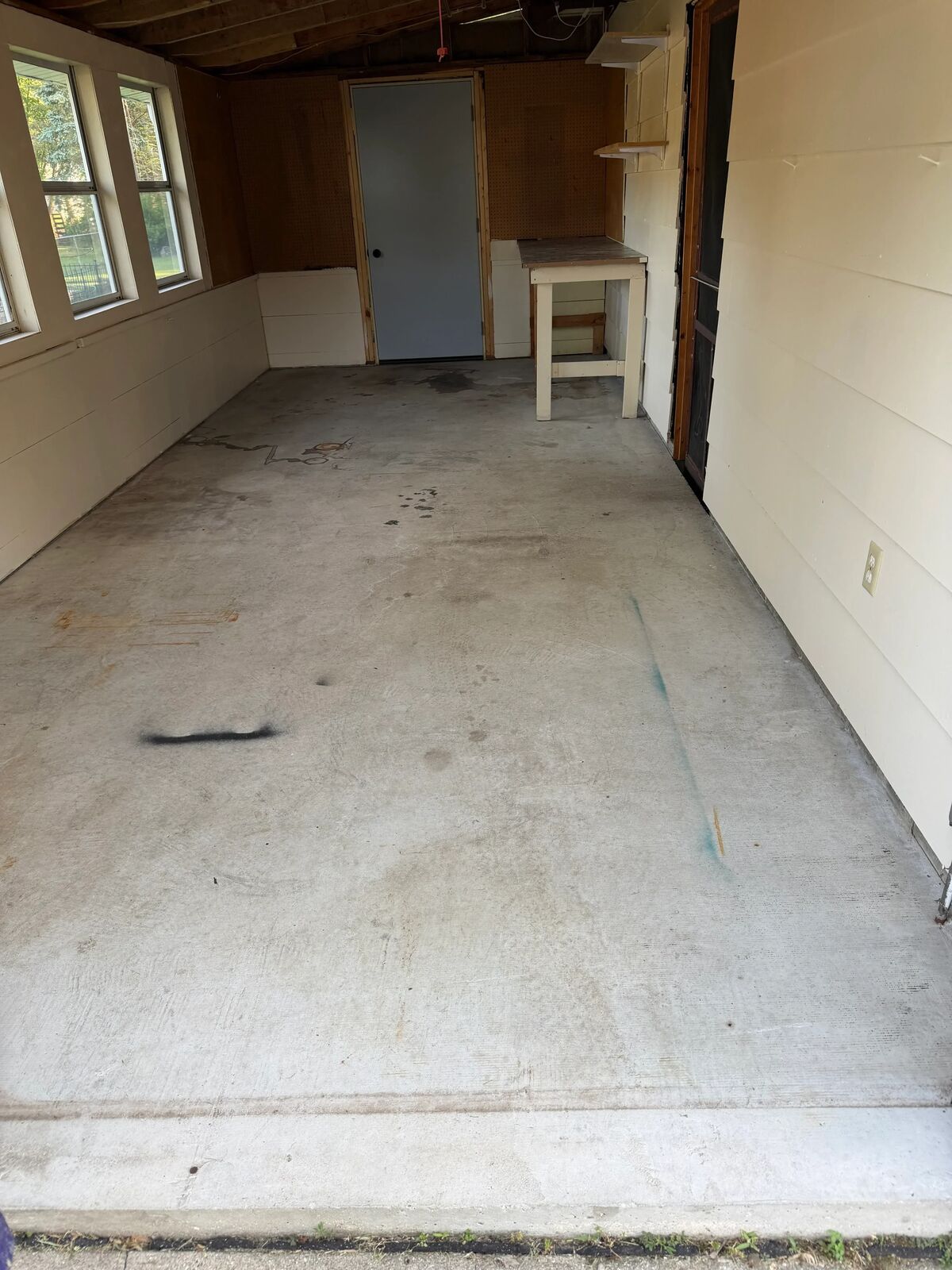
Most slabs we look at in the South Bend area are ready for a coating. Crack and pitting repair is part of every installation we do: we diamond grind the floor, vacuum the dust, cut open cracks and fill them with a 2-part repair material, then grind it smooth. Old failing epoxy and moisture are the two things we want to see in person first.
Why most "too far gone" slabs are still coatable
The most common reason a homeowner doesn't call us is that they've already decided their garage floor is beyond help. There's a crack running from the overhead door to the back wall, the surface is pitted from years of salt, and there are oil spots nobody ever got out. So the floor stays the way it is for another winter.
Here's the honest version: cracks, pitting and stains are what we expect to find. Floor prep and concrete repair is included in every installation we do, not sold as an upgrade. We don't coat over a damaged slab and hope for the best, and we don't price the prep separately to make the quote look smaller up front.
There are a couple of conditions that genuinely change the plan, and I'd rather tell you about them now than on install day. Those are covered further down.
Cracks: what we actually do with them
A crack doesn't get filled from the top and skimmed over. We cut it open first, which widens it into a clean channel the repair material can key into, and then we fill it with a 2-part repair material. Once that has cured, we grind it back down flush with the rest of the slab so it disappears under the coating.
That order matters. Filling a hairline crack without opening it leaves the repair sitting on the surface with nothing to grip, and you see the line again within a season. Cutting it open is more work, which is exactly why some quotes skip it.
Shrinkage cracks, control-joint cracks and the spiderwebbing you see near the door all get the same treatment. If a crack has a noticeable height difference between the two sides, point it out when we're there so we can look at it closely.
Pitting and spalled surface: the same repair material
Pitting is the pocked, crumbly surface that shows up on a lot of Michiana garage floors, usually worst in the first few feet inside the overhead door where wheels drop salt and slush every day through the winter.
Pitted areas get filled with the same 2-part repair material and ground smooth once it has cured. The goal is a flat, sound surface, because a coating follows the shape of what's underneath it. Fill the pits properly and you get a smooth floor. Coat over them and you get a shiny version of a pitted floor.
If salt damage is what pushed you to look into this, it's worth reading what we wrote about road salt and snowmelt on garage floors so you know what you're protecting against next winter.
Oil stains, paint and whatever else is on there
Oil spots worry people more than they should. The diamond grind comes first in our process, and grinding takes the top layer of the slab off, which takes most surface contamination with it. Dried paint, drywall mud, old sealer residue and tire marks come off the same way.
Deep oil that has soaked well into the concrete over many years is the one to flag. Tell us where the spots are when we come out for the estimate so we can look at them before we quote, rather than finding them after the grinder is already running.
You don't need to scrub the floor before we arrive. You do need to have it empty — shelving, freezer, tires, bikes, anything stored along the walls.
Old epoxy or a previous coating on the slab
If there's an existing coating down, especially a store-bought epoxy kit that's flaking, bubbling or peeling up in sheets, bring that up when you call. It isn't automatically a problem, but it changes how much grinding the floor needs and we want eyes on it before quoting.
What we're looking at is how well the old material is still bonded and how much of it there is. A thin coating that's already letting go behaves very differently than one that's stuck down hard across the whole slab.
The same goes for a floor that's been sealed at some point. Just say so. We'd rather adjust the plan at the estimate than discover it mid-install.
Moisture, and what dust control looks like
Standing water, a slab that stays dark and damp in one area, or efflorescence — that chalky white powder — is worth mentioning. Moisture coming up through concrete affects any coating system, and it's something we want to see in person rather than guess at from a photo.
On dust: we grind with vacuums that run HEPA filters, and they catch most of it. Some dust does get airborne, and we clean that up before we put the top coat down. I'd rather say that plainly than promise a dustless install. There's more detail in our post on how we control dust during diamond grinding.
Cover or move anything you care about in the garage anyway. It costs you ten minutes and saves a conversation later.
The checklist to run before you call
Walk your garage and note these: any cracks and roughly how wide and long they are; pitted or crumbling areas and where they are; oil or chemical stains; any previous coating and whether it's lifting; areas that stay damp or show white powder; and whether the floor slopes hard toward a drain or the door.
Take photos on your phone while you're out there. A wide shot from each corner plus a close-up of each crack and the area just inside the overhead door tells us most of what we need before we ever show up.
Then call (574) 400-3199 or use our contact page to set up a free estimate. Every floor is quoted on site after we see the slab, and we're currently running $500 off installation.
Frequently asked questions
Do you charge extra to repair cracks and pitting?
No. Diamond grinding, dust vacuuming, crack repair and pitting repair are part of every installation we do. That work is built into the quote you get, not added later as a change order.
Will the crack repairs be visible after the coating goes down?
We grind the cured repair material back flush with the slab before coating, so repairs aren't raised or ridged. On a decorative flake floor the flake broadcast also breaks up the surface visually, which helps a great deal.
Does the garage need to be empty before you start?
Yes. We need clear access to the entire slab for grinding, repair and coating, so everything stored on the floor and along the walls has to be out before we arrive.
Can you coat a floor that already has epoxy on it?
Often, but we want to see it first. How much grinding is required depends on how well the existing coating is still bonded, so mention it when you call and we'll look at it during the free estimate.
What if you find something unexpected once you start grinding?
We'll tell you about it right then. Being upfront about what the slab actually needs is the point of the way we work, and grinding first means surprises show up before any coating goes down.