
Yes, we coat garage floors in cold weather. The difference is cure time, not quality. In warmer weather you can walk on the floor after 24 hours and drive on it after 72. In colder weather, plan on 48 hours to walk on it and 96 hours — four days — before you park on it.
So can you really coat a garage floor in winter around South Bend?
Yes. The polyurea base coat and polyaspartic top coat we use are not the same chemistry as old epoxy kits, which is why we can keep installing through the cold months here. What changes in January is not the finished floor. It is how long you wait before you use it.
Here are our numbers, the same ones we give on the phone before you book. Warmer weather: 24 hours to walk on, 72 hours to drive on. Colder weather: 48 hours to walk on, 96 hours to drive on. That is four full days before your vehicle comes back inside on a cold install.
We would rather tell you that up front than have you find out on day three when you are trying to get a car out of the driveway before work.
What does a South Bend winter actually look like for this?
January is the coldest stretch of the year here. In South Bend the average January low is around 20°F and the average high around 33°F, according to WeatherSpark's year-round summary for South Bend, which is built on NOAA's 1991–2020 climate normals for the local station.
An unheated attached garage is usually warmer than that outside air, but not by a lot, especially once the door has been open for grinding. That is the condition the longer cure window is built for.
Late October through March is when we assume the cold-weather numbers apply. If the slab and the air are genuinely warm on the day, the shorter window applies instead. We will tell you which one you are getting before we start, not after.
Why does cold slow the cure down?
These coatings cure through a chemical reaction, and like most chemical reactions it runs slower when it is cold. The floor still reaches full hardness — it just takes longer to get there, and the colder the slab, the longer the tail.
The slab itself matters more than the air temperature. Concrete holds temperature stubbornly. A garage floor sitting on frozen ground in February is cold well after you have warmed the air in the room, which is why we go by the longer window rather than by how the garage feels when you walk in.
Walking on it early is the thing people get wrong most often. The surface can feel dry and solid before it is ready to carry weight. Vehicle tires are the real test, and that is what the 96-hour number protects.
How do you plan a winter install around your vehicles?
The practical question is where the cars go for four days. Most homeowners we work with use a driveway, a second garage, a family member's place or a street spot where it is allowed. It is worth sorting that out before you pick a date rather than the night before.
Think about anything else that lives on the floor too — the snowblower, the salt bucket, the trash cans. Those come off the slab before we grind and stay off until the walk-on window has passed.
One more thing people do not expect: the shoulder seasons and the winter calendar are often easier to book than spring and summer. If you have somewhere to put the cars, a cold-weather install can mean getting on the schedule sooner.
Why don't you advertise a one-day install?
You will see one-day installation headlines all over this market. A lot of the time that refers to the install itself, which genuinely can happen in a day. It is not the same as the floor being ready for your truck.
We would rather publish the real window. Being honest and upfront about everything, from prep through cure times, is the whole way we run this company. If a number is going to be inconvenient, you should hear it before you sign, not after the floor is down.
If you want more detail on the chemistry side, we wrote about what the polyaspartic top coat does and how long before you can drive on a new coated floor.
What doesn't change in cold weather?
The prep. Every install starts with diamond grinding the slab, vacuuming the dust with HEPA-filter vacuums, cutting open cracks and filling them along with any pitting using our two-part repair material, then grinding that back smooth once it has cured. That process is the same in December as it is in July. You can read more about our floor prep and concrete repair.
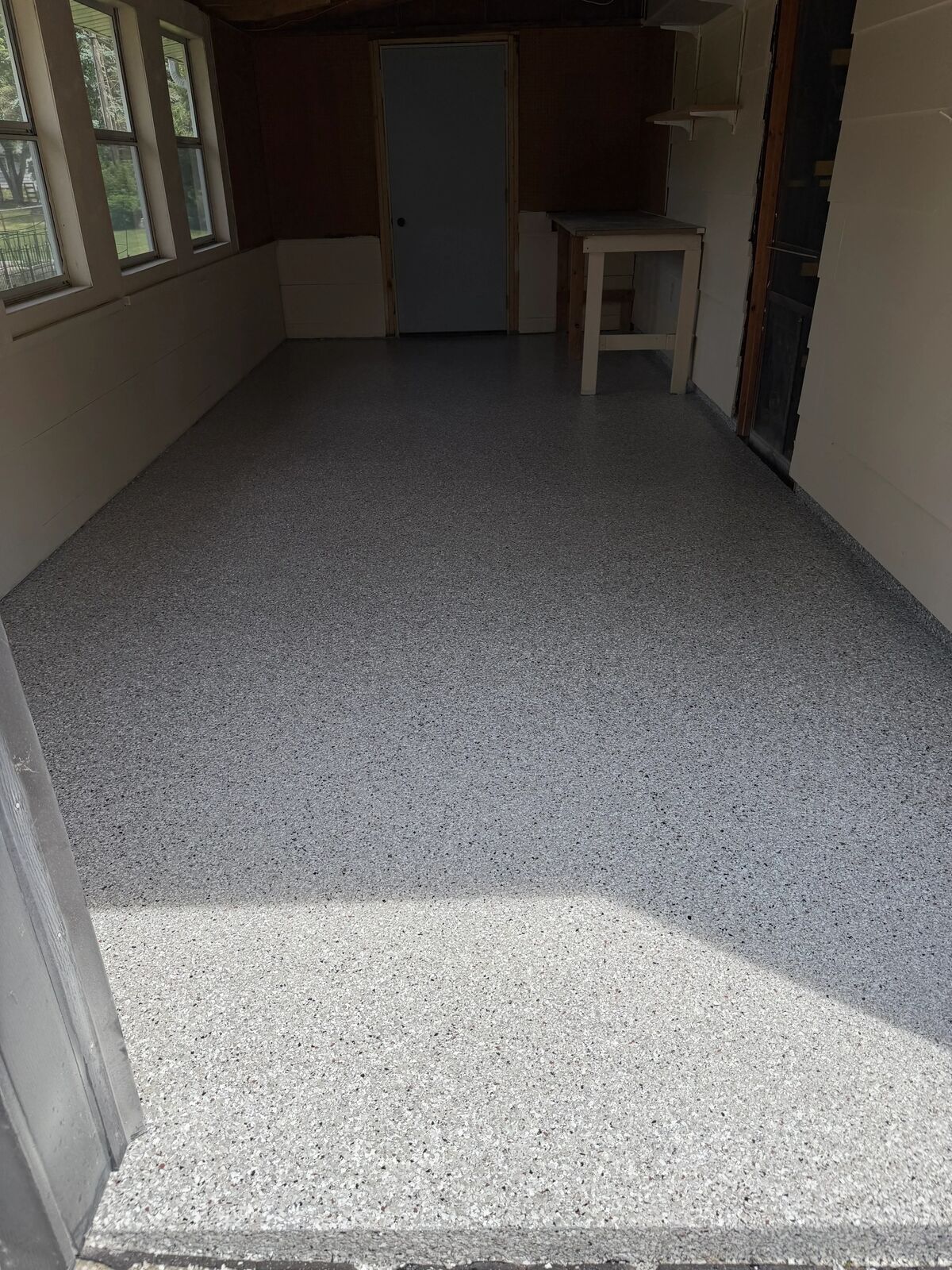
The system is the same too. Polyurea base coat, a broadcast of biodegradable, nontoxic vinyl flake for a decorative flake floor, then the clear polyaspartic top coat that seals everything in and brightens the flake colors. Shop buildings get sand broadcast instead of flake.
Winter does add one practical step: we keep the slab clear of snowmelt and salt residue before we grind. If you have been tracking slush in all season, that matters — more on that in our post on road salt and snowmelt in Michiana winters.
Ready to get a date on the calendar?
Estimates are free, and we currently have $500 off installation. Call Jonathon at (574) 400-3199 or reach us through the contact page, and we will look at your slab, tell you which cure window applies to your install date and give you a straight answer on timing.
We cover South Bend, Mishawaka, Elkhart and the rest of Michiana — you can see the full list on our service areas page.
Frequently asked questions
Does a cold-weather install make a weaker floor?
No. The cure takes longer in cold weather, but the finished system is the same polyurea base, vinyl flake or sand broadcast, and clear polyaspartic top coat we install any other month. The wait is longer; the floor is not different.
Do I need to heat my garage for the install?
You do not need to add heat for us to install. We plan around the longer cold-weather window — 48 hours to walk on, 96 hours to drive on — rather than asking you to run a heater for four days.
Can I walk on the floor before 48 hours in cold weather?
Stay off it until the 48 hours have passed. The surface can feel dry well before it is ready for traffic, and early foot traffic on a cold cure is a good way to mark a floor you just paid for.
What if the weather turns warm the week of my install?
Then the shorter window may apply — 24 hours to walk on, 72 hours to drive on. We tell you which window you are on based on actual conditions the day we install, not a guess made weeks out.
How early should I book a winter install?
Call whenever you are ready. Winter and shoulder-season dates are often easier to get than spring and summer. The bigger planning item on your end is deciding where the vehicles will sit for up to four days.